Choosing reliable Play Dough suppliers requires more than comparing prices on a product list. Global buyers must examine material quality, production consistency, packaging, and delivery performance. A colorful sample may look impressive, yet its texture can change after storage or transport. That detail matters.
This guide introduces ten Play Dough suppliers serving international buyers across different purchasing needs. The selection focuses on practical factors, including factory experience, product customization, minimum order quantities, private labeling, and export communication. Safety documentation also deserves careful attention. Buyers should request current test reports, ingredient information, age guidance, and packaging details before placing large orders. Certifications can support confidence, but they should be verified with the supplier or an independent testing provider.
A strong supplier should provide stable color, soft texture, clean molding, and secure packaging. Clear answers are equally important. Delayed replies may signal future problems with samples, revisions, or shipment updates. Freight costs, carton dimensions, and production lead times can change the real purchase price. Small trial orders often reveal more than polished catalogs. This is not always convenient.
The featured companies may suit different buyers, from educational retailers and toy distributors to promotional product businesses. However, no supplier is perfect for every market. Local regulations, customer preferences, and seasonal demand can affect the final decision. Buyers should compare samples, documents, communication quality, and total landed cost before choosing a partner. A careful review reduces avoidable risk and supports more dependable long-term sourcing.
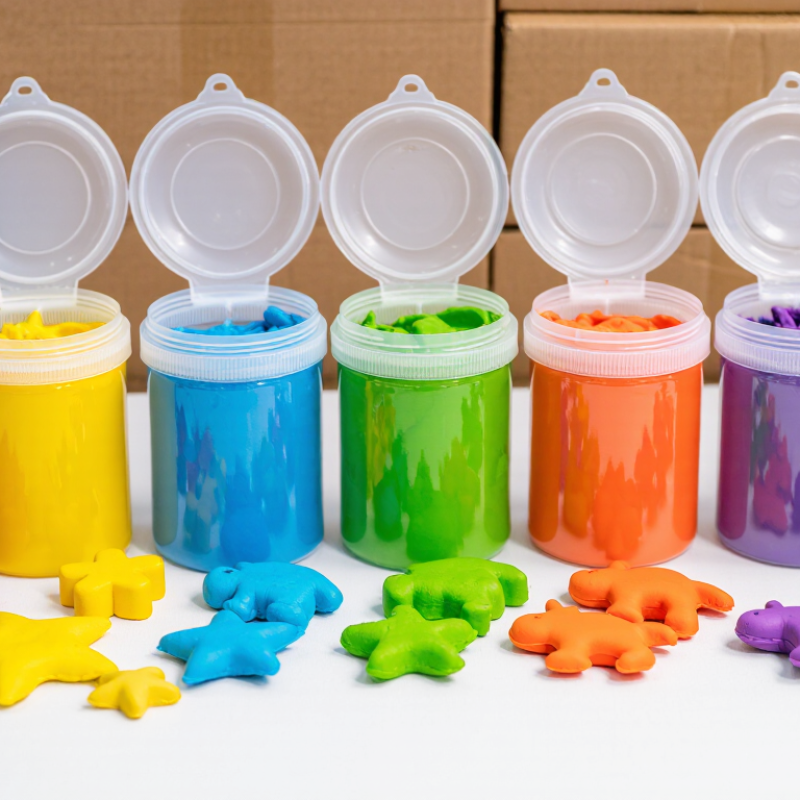
A reliable play dough supplier understands that global buyers purchase consistency, not just colorful tubs. Circana’s 2023 global toy industry review reported a 7% decline in toy sales, making wasteful inventory especially costly. Suppliers should provide stable recipes, accurate weights, and clear production schedules. Each batch needs traceability from raw materials to packed cartons. Buyers should request laboratory reports covering heavy metals, microbial safety, migration, and age grading. Relevant testing may include EN 71, ASTM F963, ISO 8124, and applicable chemical requirements in the destination market.
Safety paperwork must match the actual product. A certificate copied from an older batch is not enough. Reliable suppliers can show recent test dates, laboratory identities, and corrective actions. The European Commission’s 2023 Safety Gate report listed toys among the leading product categories with safety alerts, reinforcing the need for documented controls. Packaging also matters. Strong cartons, moisture barriers, readable warnings, and barcode accuracy reduce damage during long-distance shipping. A supplier should explain its quality checks, sampling frequency, and complaint process without avoiding difficult questions.
Price remains important, but the cheapest quotation can hide weak inspection practices. I have seen buyers focus on color and overlook drying behavior after storage. That is a mistake. Request samples from different batches, test them after heat exposure, and compare odor, texture, and residue. Independent pre-shipment inspection adds confidence, although it cannot replace supplier accountability. A dependable partner communicates delays early, accepts reasonable audits, and admits process weaknesses. Perfect claims deserve caution. Reliable evidence matters more.
Anonymous supplier benchmark profiles based on commonly used global sourcing criteria
| Rank | Anonymous Supplier Profile | Typical Production Region | Typical MOQ (Units) |
Sample Lead Time (Days) |
Mass Production Lead Time (Days) |
Indicative FOB Range (USD/Unit) |
Typical Compliance File | Customization Capability | Reliability Score (100) |
|---|---|---|---|---|---|---|---|---|---|
| 1 | Large Export-Oriented Factory | East Asia | 1,000–3,000 | 5–10 | 25–40 | 1.20–3.50 | EN 71, ASTM F963, CPSIA, REACH, SDS, batch test reports | Private label, custom colors, molds, packaging, and gift sets | 94 |
| 2 | Specialist Educational Dough Producer | North America | 500–2,000 | 7–14 | 30–45 | 2.50–6.00 | ASTM F963, CPSIA, allergen statement, SDS, traceability records | Classroom packs, sensory formulas, color sets, and teaching kits | 92 |
| 3 | High-Volume Private-Label Manufacturer | Southeast Asia | 2,000–5,000 | 7–12 | 30–50 | 0.90–2.80 | EN 71 or ASTM F963, REACH declaration, SDS, inspection reports | Large-volume colors, printed tubs, inserts, and retail-ready cartons | 90 |
| 4 | Natural-Ingredient Formula Supplier | Europe | 300–1,500 | 10–18 | 35–55 | 3.00–7.50 | EN 71, REACH, ingredient declaration, allergen statement, SDS | Plant-based or low-odor formulas, recyclable packs, and custom colors | 89 |
| 5 | Flexible Mid-Sized OEM Supplier | East Asia | 500–1,500 | 7–15 | 25–45 | 1.10–3.80 | EN 71, ASTM F963, CPSIA, REACH, SDS, pre-shipment inspection | Low-volume private label, custom kits, tools, and packaging artwork | 87 |
| 6 | Retail-Ready Gift Set Manufacturer | South Asia | 1,000–3,000 | 10–16 | 35–55 | 1.50–4.50 | EN 71 or ASTM F963, CPSIA documentation, SDS, packaging test reports | Multi-color sets, activity cards, tools, display boxes, and seasonal kits | 85 |
| 7 | Small-Batch Custom Formula Studio | Oceania | 200–800 | 14–21 | 40–60 | 3.50–8.00 | Applicable toy standard, ingredient declaration, SDS, allergen and safety statements | Special textures, scents, colors, sensory concepts, and pilot production | 83 |
| 8 | Cost-Focused Contract Manufacturer | Southeast Asia | 3,000–10,000 | 8–15 | 35–60 | 0.70–2.20 | EN 71 or ASTM F963, REACH statement, SDS, basic batch records | Standard colors, tubs, pouches, and high-volume packaging formats | 81 |
| 9 | Regional Distributor with OEM Access | Middle East and North Africa | 500–2,500 | 10–18 | 30–50 | 1.30–4.00 | Supplier test reports, SDS, applicable destination-market declarations | Language-specific packaging, mixed cartons, and regional delivery support | 78 |
| 10 | Trading Supplier with Multi-Factory Network | Global Sourcing Network | 300–2,000 | 7–14 | 30–55 | 1.00–4.20 | Factory-specific EN 71 or ASTM F963 reports, SDS, inspection records | Broad product selection, packaging coordination, and supplier consolidation | 76 |






+86-754-86986185

David: info@yo-yo.net.cn
Susan: sales8@yo-yo.net.cn
Eunice: sales3@yo-yo.net.cn
Vincent: st88@sixtrees.cn

David: +86 13118683999
Susan: +86 13829657827
Eunice: +86 13809675407
Vincent: +86 13592830482