Buying Play Dough for international markets involves more than comparing colors, prices, and package sizes. Buyers must examine safety, consistency, documentation, and supplier reliability before placing an order. A bright tub may look attractive, yet its texture can change after weeks in a hot shipping container.
This guide shares practical buying lessons from product evaluation, factory communication, and sample testing. It explains how to review non-toxic claims, ingredient information, age recommendations, packaging strength, and production quality. It also considers moisture control, odor, color transfer, and the small tools included in each Play Dough set. These details matter when products reach classrooms, homes, or retail shelves across different regions.
Requirements differ between markets. Check current local rules.
A dependable supplier should provide clear specifications, batch information, test reports, and consistent answers. Buyers should request samples from different production batches, not only one carefully prepared package. We may overlook minor issues during a quick inspection, especially when deadlines are tight. That is why a written checklist and independent verification can reduce costly surprises.
Price still matters, but the lowest quotation may hide weaker packaging, unstable formulas, or limited after-sales support. Consider the full buying picture, including shipping conditions, shelf life, labeling, and replacement procedures. The following ten tips help global buyers ask sharper questions, compare suppliers fairly, and choose Play Dough with greater confidence. No checklist is perfect. Careful judgment remains essential.
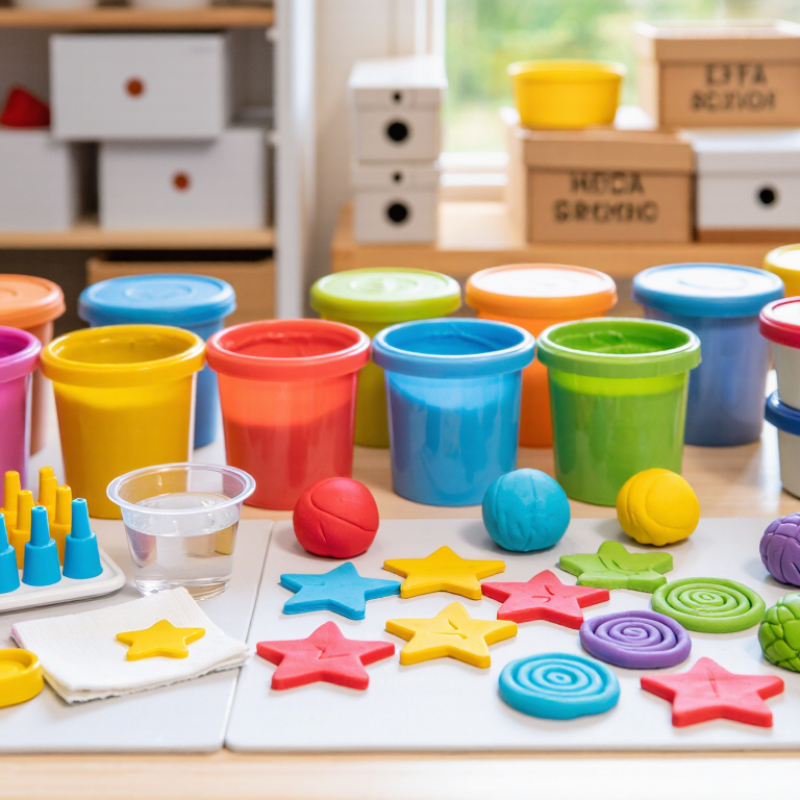
Defining product scope is the most important step when buying play dough internationally. Age grade should match the child’s ability, packaging language, and intended use. A soft dough for toddlers may need simpler tools and larger pieces. Older children may accept firmer textures and detailed molds. Do not rely only on a supplier’s age suggestion. Request test samples and review the supporting safety documents.
Weight also affects freight cost, shelf appeal, and customer expectations. Specify whether the listed weight includes dough, tools, containers, and packaging. For example, a 500-gram set may contain five 100-gram tubs or one large block. These formats create different selling experiences. Check the actual filled weight from several samples. Small variations can become expensive across thousands of units.
Color planning needs more detail than “bright colors.” State the exact color count, preferred shades, mixing rules, and whether colors must remain separate. A six-color set might require red, yellow, blue, green, white, and purple. Confirm the number of tools and accessories too. SKU requirements should cover scent-free options, seasonal packs, private packaging, and carton quantities. Keep each SKU clearly coded. A tidy spreadsheet can still mislead. I once overlooked a minor lid-color change, creating extra inventory and confusing warehouse labels. Review the final specification with production, quality control, and logistics teams before placing an order.

For global buyers, play dough safety begins with the correct standard, not a supplier’s promise. ASTM F963-23 became mandatory for many children’s products in the United States on April 20, 2024. It addresses hazards including soluble heavy elements, flammability, and mechanical risks. In Europe, EN 71 requires a broader review across chemical, physical, flammability, and labeling requirements. ISO 8124 offers an international testing framework, but it does not automatically replace local laws.
The numbers deserve attention. The U.S. Consumer Product Safety Commission reported about 231,700 toy-related injuries treated in emergency departments during 2023. Play dough is soft, yet children may swallow it, press it into small parts, or use it near heat. Ask for recent laboratory reports covering the finished dough, colors, preservatives, tools, and packaging. Check that testing matches the stated age grade and destination market. Also verify laboratory accreditation and sample identification.
A certificate alone is not enough. Small details matter. I would compare the report date, batch number, formulation, and test methods before approving a shipment. Suppliers sometimes provide reports for an older recipe, which creates a costly blind spot. Re-test after changing pigments, fragrances, salt levels, or preservatives. That step may feel excessive, but children’s products punish assumptions. CPSC injury data, ASTM F963-23, EN 71, and ISO 8124 should guide a documented, market-specific buying decision.
Use this comparison as a screening checklist. ASTM F963-23, EN 71, and ISO 8124 all address the three core safety domains shown below: mechanical and physical properties, flammability, and migration of certain elements. Confirm the applicable edition, test method, and destination-market requirements before purchase.
Coverage shown represents the principal safety domains commonly reviewed for play dough and similar modeling compounds; it is not a substitute for a complete conformity assessment or laboratory test report.
For global buyers, ingredient auditing should start before price negotiation.
U.S. CPSC guidance requires lead in children’s products to stay at or below 100 ppm. It also limits eight specified phthalates to 0.1% each. These are finished-product limits, not merely raw-material targets.
Ask suppliers for a complete formula, safety data sheets, and batch traceability. Then verify testing through an accredited laboratory. Test the dough, colorants, glitter, fragrance, and packaging separately when risks differ.
Keep the report number, sample date, method, and production batch together.
The EU Safety Gate 2023 report recorded 3,412 alerts and 4,287 follow-up actions.
Chemical risks represented about 32% of reported cases, showing why paperwork alone is weak evidence.
A supplier declaration can become outdated after a formula adjustment. That is an easy mistake. Retest when pigments, softeners, fragrances, or recycled packaging change.
Ask whether phthalate results use a detection limit suitable for the 0.1% threshold. Also confirm that lead results use total lead analysis, not a vague “heavy metals passed” statement. CPSC Children’s Product Certificate guidance supports documented third-party testing for applicable children’s products. Buyers should still review laboratory scope and accreditation. Compliance is not a one-time file; it is a controlled process with gaps worth questioning.
Supplier evaluation starts with measurable evidence, not attractive samples. Request the MOQ by color, scent, packaging format, and production batch. A low MOQ may hide higher unit costs or unstable raw-material planning. Ask for monthly capacity, peak-season output, lead times, and backup production lines. Capacity claims should match purchase orders, factory records, and recent shipment schedules. Photographs alone are weak evidence.
Define AQL before inspection. ISO 2859-1 provides the sampling framework, but buyers must set defect limits contractually. Common commercial plans use AQL 2.5 for major defects and 4.0 for minor defects. Critical safety defects usually require zero acceptance. The U.S. Consumer Product Safety Commission reported about 231,000 toy-related emergency-department injuries in 2023. That figure makes loose parts, sharp packaging edges, and contaminated dough unacceptable risks. Sampling cannot replace chemical, microbiological, and safety testing.
Quality records reveal supplier discipline. Request batch codes, incoming-material checks, moisture records, microbial results, corrective-action reports, and retained samples. For play dough, inspect texture consistency, odor, color migration, mold resistance, and sealed-pack integrity. Verify testing against the destination market’s requirements. Keep records for every shipment. A supplier with perfect paperwork may still fail a live inspection. My checklist is not flawless; I once underestimated how quickly humidity changed dough texture during sea transit. Pre-shipment testing should include realistic temperature and humidity exposure. Supplier audits should also review worker training and complaint trends, not only certificates.
Global play dough buying starts with trade details, not only color and softness. Confirm the product composition, intended age, net weight, and packing format before requesting prices. Ask for carton dimensions, inner seals, pallet plans, and drop-test results. A tight lid matters when cartons travel through humid ports. Multilingual labels should show ingredients, warnings, batch numbers, and manufacturer information.
Check the proposed HS code with a qualified customs broker and the destination authority. Similar products may receive different classifications because of composition or use. Do not copy a supplier’s code without verification. Incoterms define delivery responsibilities, costs, and risk transfer. They do not guarantee product quality or replace a written inspection agreement. Choose terms that match your freight experience and insurance control.
Shelf life needs evidence. Request stability data, production dates, storage limits, and a clear expiry policy. Keep samples from each batch for comparison. Testing should match the destination market and the product’s age range. Use an independent, competent laboratory for safety, migration, heavy metals, microbiological, and mechanical checks where applicable. A test report is useful, but it can become outdated after a formula or package change. It is easy to overlook this. A small pilot shipment, pre-shipment inspection, and retained sample can reveal crushed cartons, drying edges, or unclear labels before a full order leaves the factory.
+86-754-86986185
David: info@yo-yo.net.cn
Susan: sales8@yo-yo.net.cn
Eunice: sales3@yo-yo.net.cn
Vincent: st88@sixtrees.cn
David: +86 13118683999
Susan: +86 13829657827
Eunice: +86 13809675407
Vincent: +86 13592830482