Top 10 Must-Have Children Toys for 2023: Safe, Fun, and Educational!
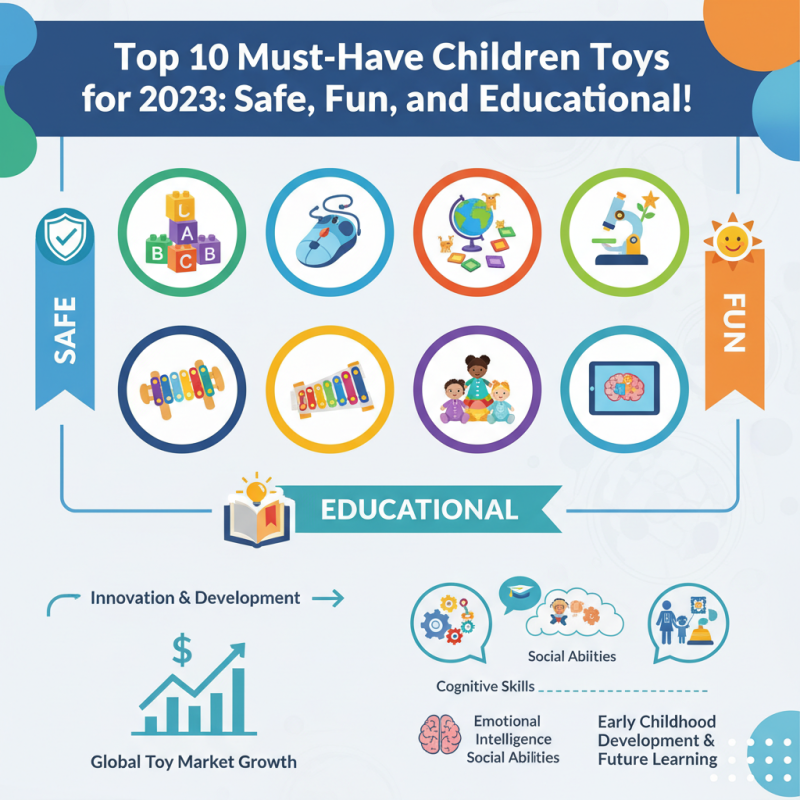
As we embark on a new year, the landscape of children's toys continues to evolve, driven by the dual demands for safety and educational value. According to the Toy Industry Association, the global toy market is projected to reach $120 billion by the end of 2023, reflecting a growing emphasis on innovation and development in the realm of children toys. In particular, the increasing awareness among parents about the significance of play-based learning has led to a shift towards toys that not only entertain but also educate.
Research indicates that engaging children in play with the right toys can enhance cognitive skills, emotional intelligence, and social abilities. A report from the National Association for the Education of Young Children highlights that high-quality children toys significantly contribute to early childhood development and can effectively prepare children for future learning. As families prioritize educational play, the market has responded with a plethora of options that blend fun with developmental benefits.
This guide aims to unveil the top 10 must-have children toys for 2023—choices that combine safety, enjoyment, and educational merit. By focusing on these key factors, parents can ensure they provide their children with toys that foster growth while keeping playtime safe and enjoyable.
Top Trends in Children's Toys: Insights from the 2023 Market Analysis
The toy market in 2023 has experienced a significant evolution, emphasizing safety, fun, and educational value. As parents increasingly prioritize products that stimulate learning and development, toys that incorporate STEAM (Science, Technology, Engineering, Arts, and Mathematics) have surged in popularity. Interactive and multi-functional toys are trending, offering children unique ways to engage with complex concepts through play. These trends reflect a broader understanding of play as a crucial component of childhood development, where creativity and critical thinking are nurtured.
When choosing toys, it is essential to consider their educational potential. Look for options that promote problem-solving skills, such as puzzles or building sets, which encourage children to think critically while playing. Additionally, prioritize toys made from non-toxic and sustainable materials to ensure safety and environmental responsibility. Engaging with your child during playtime can also enhance their learning experience; ask open-ended questions about what they are building or creating.
Lastly, stay attuned to the latest trends in technology and interactive play. Smart toys that promote coding skills or virtual reality experiences that provide immersive learning opportunities are becoming increasingly prevalent. Such innovations not only entertain but also prepare children for a tech-driven future. Keeping these trends in mind will help you select toys that are not only fun but also enriching for your child's development.
Safety Standards in Toy Manufacturing: Ensuring Child Safety in 2023
In 2023, ensuring child safety in toy manufacturing has become more crucial than ever, with heightened awareness among parents and regulators. According to the Toy Association, approximately 75% of parents prioritize safety features when selecting toys for their children. This statistic underscores a significant cultural shift towards an emphasis on safe, high-quality materials and the elimination of hazardous components in children’s toys.
Regulatory measures, such as the ASTM F963 safety standard in the United States, dictate stringent testing requirements aimed at minimizing risks associated with choking hazards, toxic substances, and sharp edges, demonstrating a commitment to child safety in the toy industry.
Furthermore, the global market for safe toys is anticipated to grow, reaching an estimated $100 billion by 2025, as consumers increasingly seek products that not only prioritize play but also align with safety standards. Industry reports suggest that toys meeting recognized safety certifications can lead to a 15% increase in sales, emphasizing the importance of compliance with safety regulations.
As manufacturers adapt to these evolving standards, they are innovating with materials like BPA-free plastics and non-toxic paints, which not only enhance safety but also contribute to the educational value and durability of toys. Consequently, consumers can expect a wider array of safe, fun, and educational toys as the industry continues to prioritize child safety in its manufacturing processes.
Educational Benefits of Play: Enhancing Cognitive Development through Toys
Play is an essential component of early childhood development, significantly enhancing cognitive abilities through diverse forms of engagement. Research indicates that children learn best when they play, as play stimulates critical thinking, problem-solving skills, and creativity. According to a report by the American Association for the Child's Right to Play, play-based learning not only boosts academic performance but also fosters social and emotional skills essential for lifelong success. Toys that encourage imaginative play, such as building blocks and creative art sets, have been linked to improved spatial reasoning and innovative thinking—skills highly valued in today's STEM-focused educational landscape.
Moreover, interactive toys that promote cooperation and teamwork can lead to improved communication skills among young learners. A study published by the National Institute for Early Education Research found that children who regularly engage with collaborative toys exhibit a 15% increase in their ability to work in groups and articulate their thoughts. Educational toys that emphasize collaboration facilitate discussions, negotiation, and shared problem-solving, which are crucial for cognitive and social development. As parents and educators seek to provide enriching experiences for children, investing in safe, fun, and educational toys becomes an essential strategy for nurturing both intellectual and interpersonal skills.
Top 10 Must-Have Children Toys for 2023: Safe, Fun, and Educational
| Toy Name |
Age Range |
Type |
Educational Benefits |
Safety Rating |
| Building Blocks |
3+ |
Construction |
Enhances creativity and fine motor skills |
A+ |
| Puzzle Game |
4+ |
Cognitive |
Improves problem-solving skills |
A |
| Art Supplies Set |
5+ |
Creative |
Fosters creativity and self-expression |
A+ |
| Interactive Robot |
6+ |
Tech |
Introduces coding and robotics |
A |
| Musical Instruments |
3+ |
Music |
Enhances auditory skills and creativity |
A+ |
| Board Games |
5+ |
Social |
Promotes critical thinking and teamwork |
B+ |
| STEM Kits |
7+ |
Education |
Encourages interest in science and math |
A |
| Outdoor Adventure Set |
4+ |
Active Play |
Promotes physical activity and exploration |
A |
| Storybook Collection |
2+ |
Literature |
Enhances language skills and imagination |
A+ |
| Imaginative Play Set |
3+ |
Role Play |
Develops social skills and creativity |
B+ |
Interactive and Tech-Enabled Toys: The Future of Learning and Entertainment
As technology continues to evolve, so do the ways children play and learn. Interactive and tech-enabled toys have emerged as a cornerstone in modern childhood, seamlessly blending entertainment with education. These toys not only captivate children’s attention but also foster essential skills such as critical thinking, problem-solving, and creativity. For instance, robotic kits that allow kids to build and program their own devices promote hands-on learning and technical proficiency, laying the groundwork for future innovation.
In addition to fostering skills, these toys often incorporate adaptive learning technologies that cater to individual children's needs and learning speeds. By utilizing sensors and artificial intelligence, interactive toys can provide personalized feedback, making the play experience more engaging and effective. Moreover, many tech-enabled toys facilitate social interaction, allowing children to collaborate and communicate with their peers. This not only enhances their learning experience but also builds social skills, which are crucial in today’s interconnected world. As we look to the future, it is clear that interactive and tech-enabled toys will play a significant role in shaping how children learn and grow, making playtime not just fun, but a vital part of their educational journey.
Top 10 Must-Have Children Toys for 2023
Choosing Eco-Friendly Toys: Environmental Impact and Sustainability Efforts
In recent years, the importance of choosing eco-friendly toys has gained significant traction among parents and educators alike. These toys not only provide fun and entertainment for children but also promote sustainable practices that benefit our planet. As the awareness of environmental issues grows, many are turning to toys made from biodegradable materials, recycled plastics, or sustainably sourced wood. Such choices minimize the carbon footprint associated with manufacturing and shipping, helping to reduce waste and pollution.
Moreover, eco-friendly toys often come with educational value, teaching children about the importance of sustainability from a young age. By engaging with toys that reflect eco-conscious principles, children can develop an appreciation for nature and the environment. These toys can serve as a platform for discussions about recycling, conservation, and the impact of consumer choices. As more brands commit to sustainability efforts, parents are given the opportunity to instill values of responsibility and stewardship in their children, fostering a deeper understanding of the interconnectedness of their actions with the health of the planet.